One of the first questions people ask when I tell them what I do is, “how is that different from a neurosurgeon?” A second common response is, “Do you look inside people’s brains?” and my favourite, “Can you give me better memory?”
Well, I don’t cut open brains. But I do stimulate them! And I can’t improve your memory, but I can help understand memory and design tools to promote better function. Here, the conversation often diverges down a path that is impossible to predict but always interesting. It’s easy to talk about brains. We all have one. And we all have experience with how it works, or doesn’t.
The brain is one of the most complex organs in our universe. Many of it’s secrets remain a mystery to modern science. But there has been an explosion of knowledge and breakthroughts with the advent of techniques that allow us to measure the brain in real time, in awake humans, and computer processing to make sense of it all.
So, a second point I often clarify at dinner conversations is, “No I cannot treat your ADHD”.
That would be a job for a clinical neuroscientist. Or a clinical psychologist or neurologist, depending on the exact illness. I am a scientist, not a therapist. I have advanced training in neuroimaging, neurostimulation, data analytics, research design and cognitive science. I do not have advanced training in diagnosis and cognitive behavioural therapies. Though, as with most fields of science these days, I exist at the intersection of many fields. And I traverse many fields in a single day to do my job.
In order to understand biology, you need to understand a bit about chemistry. Well to understand the neuron, you need to know a bit about physiology and biochemistry. In order to understand the way magnetic fields can image and affect neural signalling, you need to know a bit about physics and Faraday’s law.
Cognitive neuroscience is fascinating because it involves pulling (and pooling) knowledge from all these fields – chemistry, physics, mathematical modelling, psychology, neuroscience and biology – to design experiments, make sense of data, and interpret research findings. It’s a blast!
A day in the life.
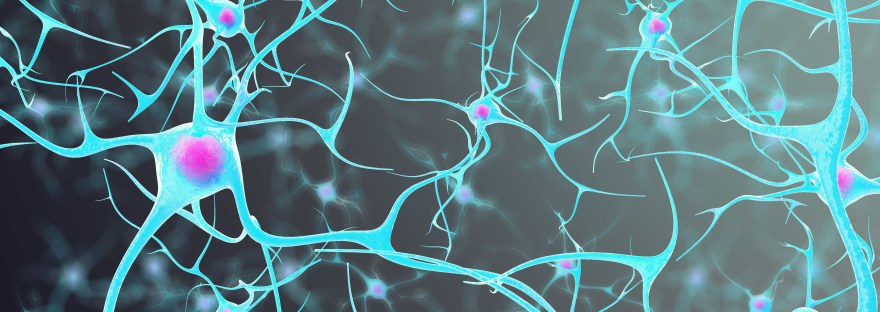
As a cognitive neuroscientist, I conduct experiments seeking to understand the neural mechanisms responsible for cognitive functions like learning, attention and decision-making. Conversely, a clinical neuroscientist conducts assessments that can inform treatment of clinical conditions, like traumatic brain injury, complex co-morbid conditions, and dementia. The fundamental focus of “cog neuro” research is to understand how populations of neural activity supports information processing. How do neurons “code” information? We may know that signals in the visual cortex get translated to edges, colours, and basic shapes. But once at the level of objects, we do not yet know the neural code for a table, versus a snake, versus a giraffe. Let alone the neural code for, “that thing you remembered last week”, or “love”. Understanding the basic function of the brain is important because we can’t understand clinical illness without knowing something about the basic mechanisms of healthy brain function. The networks that support learning are commonly affected in neurological conditions like depression, OCD, stroke and neurodegeneration. Crack the code, crack the cure.
The ultimate goal of this research is to characterize what happens when things go wrong, and discover treatment targets. At the same time, most people would like to have better attention and memory, even if they don’t have a clinical condition. Cognitive neuroscience is often applied to commercial endeavours like training, health and wellness.
During my PhD, I was fascinated by how the brain learns automatically, without even trying. How we can pick up highly complex regularities and statistical characteristics of our sensory environments simply from experience. This type of learning is called unconscious statistical learning, and is possibly a fundamental form of Hebbian plasticity in action. Since then, I’ve continued to ask questions about how cells in the brain represent information and how we can stimulate the networks to understand function and improve disease symptoms.
Here’s is me at my first international conference. Stary-eyed and full of potential.
“Learning is an experience. Everything else is just information.”
– Einstein.

Inspiring speakers, forward-thinking discussions about open science and translational approaches, cutting-edge workshops on machine learning for imaging analysis.
What a ride!
Cycling around Amsterdam with the wind in my hair, macbook on my back, and nothing but opportunity ahead. This past month in Netherlands has been inspiring and productive. My first week, I attended a model-based neuroscience summer school where I learned about mathematical models, using diffusion models, to map neural function to behaviour.
Afterwards, I attended the International Cognitive Neuroscience Conference (ICON) in Amsterdam. Along with a dozen of my peers from Queensland and Australia, we descended on the city to hear from and discuss current findings with scientists around Europe and the globe.
It was my second time attending ICON, the first being during my honours thesis, and this time I got to present my work. My poster presentation was on the results of my first first-author paper, later published in the journal Cortex in 2018. I was eager to discuss ideas and to pick the brains of experts on topics in automatic cuing of attention and mathematical modelling.
The poster session took place in a large hall with towering mezanene levels and arch windows of stained glass. It was absolutely beautiful, although quite echoey. Among the rows and rows of posters and students, I was nestled against the pews in the end row, hoping someone would bring me a snack during the 3-hour long afternoon session.
I was proud of the work. A large-scale brain stimulation study with 120 healthy participants in a double blind and sham-controlled design.
Our results showed we could modulate an automatic, unconscious form of learning by stimulating neural activity in the frontal and parietal cortices using tDCS. When we stimulated these regions with cathodal currents, learning became increasingly faster compared to sham stimulation. This result was reliable, according to Bayesian analysis, and meaningful in that stimulation produced a 20 ms advantage for finding the target compared to no stimulation. In high-stakes situations, like driving, flight or combat, 20 ms could mean life or death.
Previous research had shown performance could be improved with brain stimulation during explicit tasks, such as a stimulus-response mapping task or memory recall task. This was the first time anyone had shown processing could be modified that was taking place below the level of awareness. This was novel because implicit learning mechanisms are thought to be served by deeper brain areas in the hippocampus, rather than cortical areas. This result extended on recent imaging work to add direct causal evidence, and suggested a review of the existing theories on implicit learning and memory regions.
In order to promote data sharing and rigorous research practices, I pre-registered the study on the open science framework (OSF). All methods, hypothesis and sample-size were locked in prior to data collection. After the study was done and analyzed, all materials and code have been made available on the osf. website to encourage replication and reproducibility. This practice I learned at ICON, and it has continued with me ever since.
My trip ended with a lab visit to Radbound University in Nijmegen, and a lovely stay with my Dutch family, cousins, aunty and uncles in Haarlem. So happy to end my first PhD year with a conference and a paper done. Full of ideas, and cheese, off to craft the next question.

 Dr Abbey Nydam