
Everyday in hospitals around the world, patients are receiving life changing treatments for depression using non-invasive brain stimulation tools. But how did we get here?
Many years ago, a man put an electric eel on his head and noticed the brain changing effects. Fourty years ago, the first magnetic brain stimulation devices were being used. And now, we have over 8 different types of devices that use different waves, pulses, infra-red, magnetic and electrical pulses to affect our brains and learn how they work. This story about a primitive form of electrical brain stimulation is shared among neuroscientists in conferences across the world.
How does TMS work?
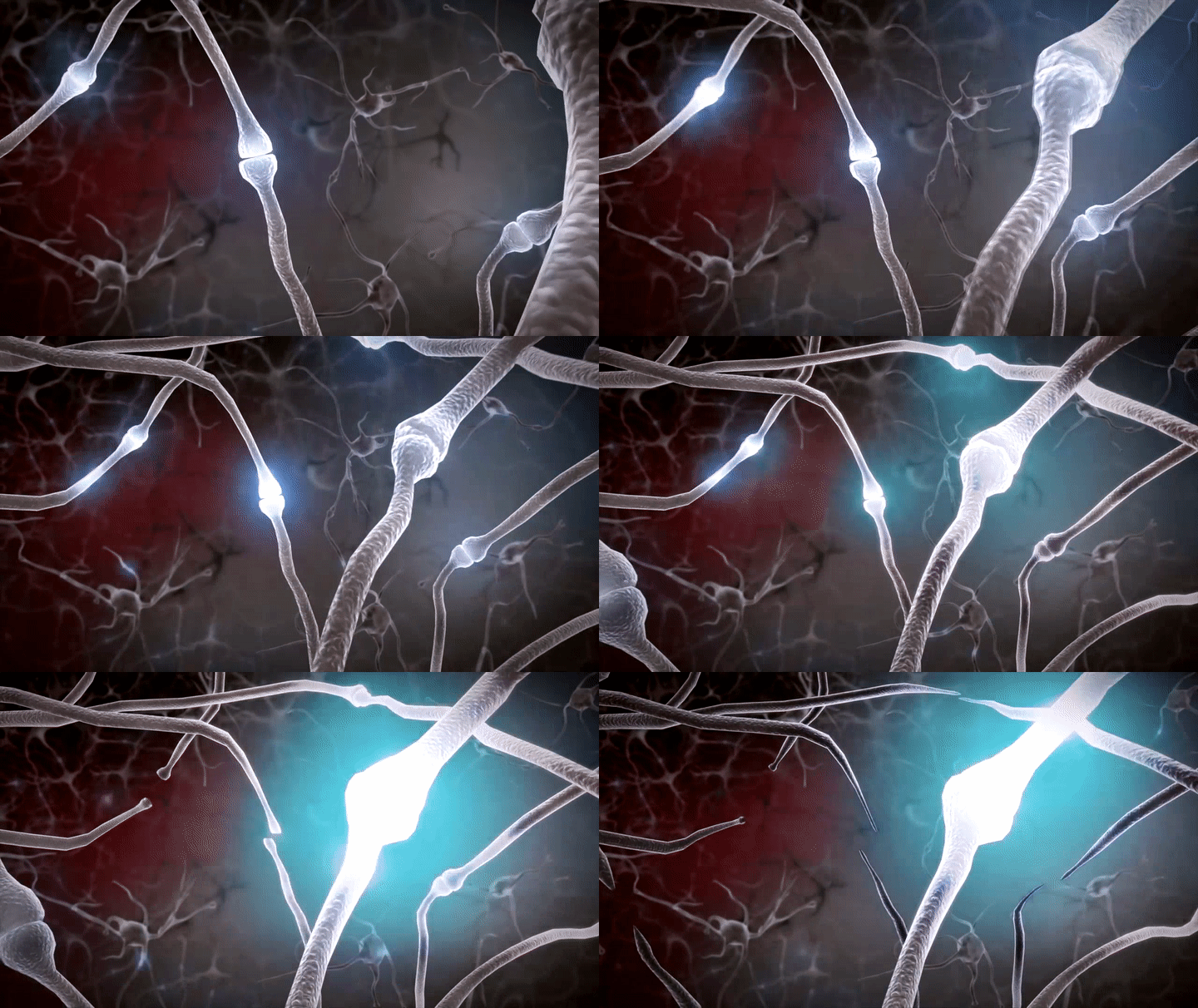
The brain uses electrical signals to communicate. Neurons fire in orchestrated patterns to achieve thought and behaviour. A change in the strength of the connections is the key mechanism responsible for learning and memory. This change is called plasticity.
Neural plasticity occurs in the brain when we learn a new skill, or remember an enjoyable weekend. By using a magnetic pulse just above the scalp, we can painlessly activate neurons and alter plasticity using TMS.
A TMS pulse causes a population of neurons in a target area to fire, and discharge an action potential. Depending on the intensity, timing and location of these pulses, scientists can stimulate a node in a given brain network in a repeated fashion, and induce short-term or long-term plasticity. Changes in long-term plasticity can help us treat brain disorders and improve the symptoms of depression and cognitive decline. Changes in short-term plasticity are useful when designing experiments that can elucidate the basics of brain function, like attention and memory.
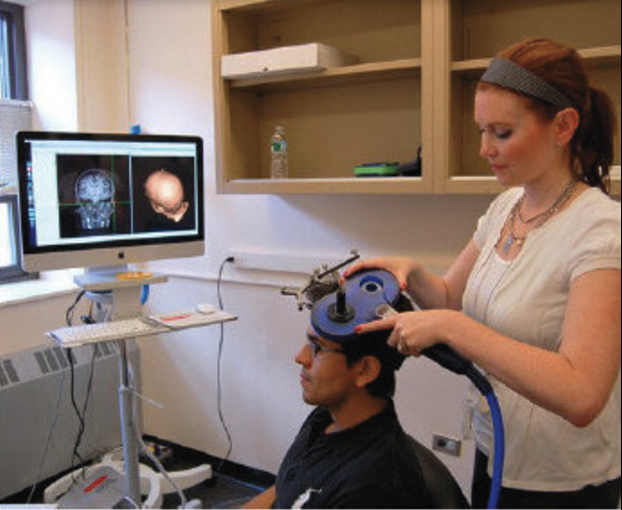
Scientists use many forms of brain stimulation to accomplish different applications.
Lab and Hospital-based TMS
In my job, I get to conduct experimental research in the field of cognitive and clinical neuroscience. I deliver lectures to university students on topics such as visual-spatial attention, contextual memory, cognitive control, and learning induced biases, brain development and brain disease.
Outside the lab, I write grants to fund my research, speak at international conferences, and collaborate to publish academic papers in high impact journals, such as Nature Reviews Neuroscience.
Contact me to learn how you can get involved in life-changing research on brain disease

 Dr Abbey Nydam