Tackling disadvantage head on with curiosity and chocolate. The Wonder of Science program runs school-based STEM projects in rural schools and towns around Queensland on topics like volcanoes, water filtration, the solar system and more.
My role as a Young Science Ambassador in 2018-2019 was one of the most rewarding experiences during my four years as a graduate student. I got to travelling around my state, to rural towns and lead interactive design-based lessons for students. I quickly saw the need for STEM advocacy in the community.
The kids get involved in a day of workshops, then a six-week project done in teams ending in a state conference where they present their work to an audience of peers, university scientists, parents and friends. Think TED talks, but for 7-15 year olds. Spanning physics, science, math and technology, these design-based projects get kids thinking differently about the world, asking questions, and their futures.
Travelling Scientist
But you can’t be a scientist, you’re a girl – said more than one student on my arrival at a rural town in outback queesnland to teach science workshop. I smiled and said well I am a scientists. And my friend here is too.
The Journey to Dalby
Setting off on a 8 hour drive into the outback with two scientists, podcasts, cruise control and a kit of activities and interactive planned. We were in for a surprise.
My parents are in the medical field, a doctor and a radiographer. And my friend’s parents both have PhDs in biology. We grew up in large regional cities and went to big world-ranked universities. I was naive to how different it was elsewhere.
We woke up early to drive to the primary school, passing a dust dry race course with red dirt, and nothing in between. We were eager to meet the students and teachers and run our interactive science-based lessons. I don my brain beanie as a prop.
The highlight was the tectonic plate demonstration using MarsBars (a delicious caramel chocolate) to reenact three types of collisions: subversion, which form mountains, cause earth quakes and trenches. After that, the room was bustling with energy, students were asking questions, the teachers were asking questions, and we were deep in activity learning.
The term went on and I visited two more times to help students and teachers with the term project, giving guidance, watching practice presentations and always stopping to give space for them to ask any question they like for a scientist.
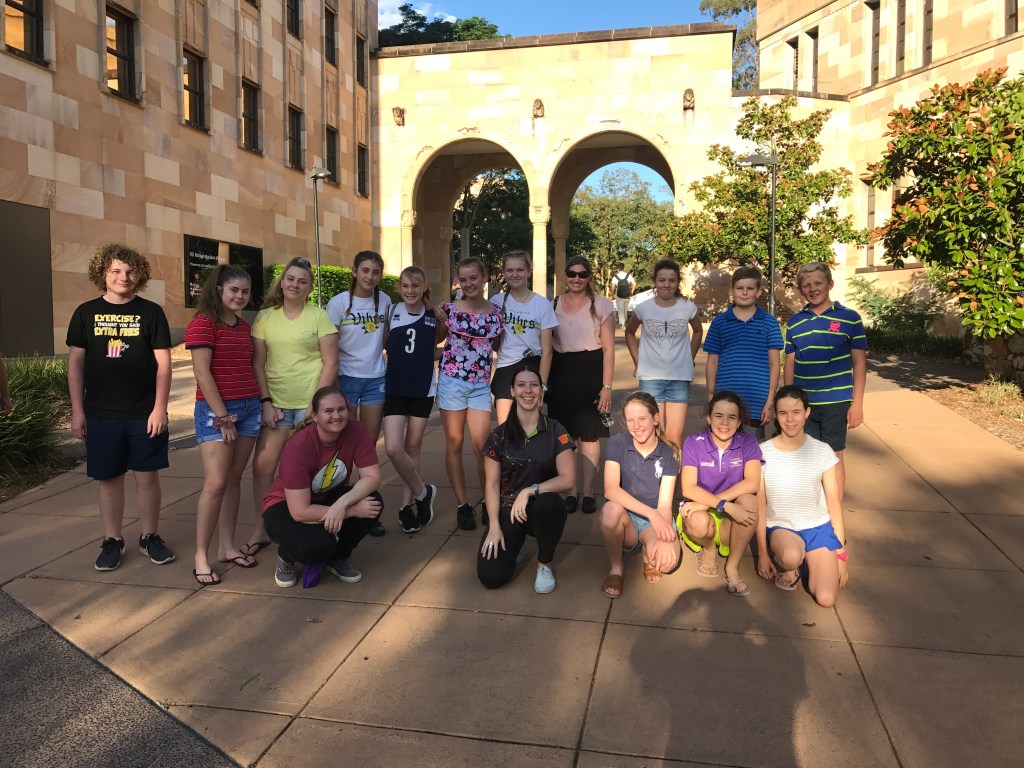
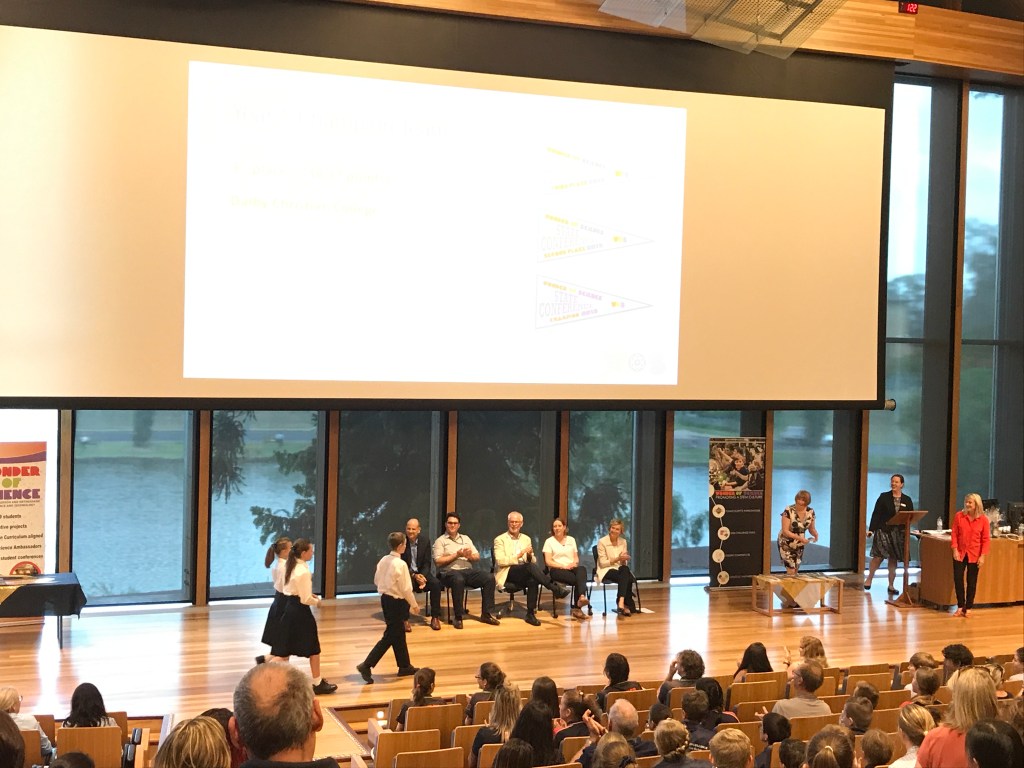
The term culminated in the State conference where teams would compete in a local conference, and finalists from each regional town would get selected for the State conference. Held in a majot city, at a university, like a real science conference.
I was so proud to learn that two of my teams of students qualified and would be attending the conference. The presentations were endearing and inspiring. And one team won 1st prize!
How does this help teach STEM?
The most direct application of the scientific method taught in the program was about the scientific method and the steps to conduct an experiment. The idea was captured in a memorable diddy:
Cows Go MOO
This stood for: Measure One thing. Manipulate One thing. Everything else stays the same.
In addition to these hard skills, the program taught a litany of soft skills though the magic of design thinking.
Foremost it was about fun. Fun experiences are more memorable. The design thinking approach helps structure the thinking. Teaching kids the process of enquiry, beginning with: What question will you start with? What is the scope? Materials. Timeline. How will you measure success?
Then the project involved physically making something. A prototype. To do this, students are required to engage in planning, calculations, imagination, mental rotation and experimentation. You will fail. Your first prototype will not likely your last. Bit you will learn mch along the way.
Teams and teachers bring it all together. If we could measure the brains of these kids before and after, there’s no doubt there would be a change. But we don’t need to. We felt the impact and heard about it in the overwhelmingly positive feedback from teachers, students and parents. Now, six years on, the Wonder of Science program is alive and well and I’m so grateful to have been a part of its early life.
Thankyou to the program organizers, funders and hosts.
I'm a neuromodulation expert in clinical research, scholar and educator living in Toronto, Canada. Data analyst, brain science teacher and embodied movement trainer.
View all posts by abbeynydamcogneuro




 Dr Abbey Nydam